


Management of patients experiencing allergic symptoms following oral challenge
Oral Penicillin Challenge – Initial management of patients experiencing allergic symptoms
Patients undergoing oral penicillin challenge should be managed by appropriately trained staff with immediate access to full resuscitation facilities including advanced life support equipment and drugs.
Patients experiencing mild to moderate allergic symptoms (eg itch, urticaria, sneezing or rhinitis) following an oral challenge should have their vital signs (heart rate, blood pressure, oxygen saturation and respiratory rate) monitored as part of the approach to managing anaphylaxis.
If anaphylaxis is suspected think:
Exposure
- Oral antihistamines (eg 4 mg chlorphenamine)
- Inhaled bronchodilators (eg two puffs salbutamol)
- Oral steroids (eg 30 mg prednisolone)
Patients should be monitored closely and reassessed regularly. If symptoms do not improve, or the clinical picture deteriorates, call for senior medical assistance. Supplementary oxygen should be given via a face mask and intravenous access obtained.
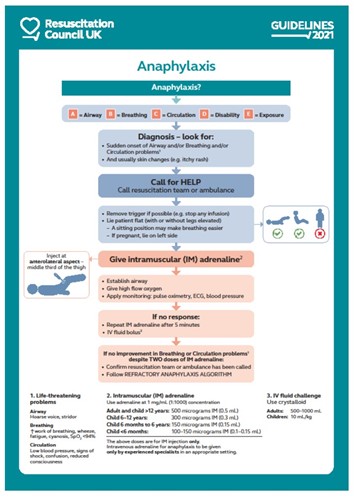
If anaphylaxis is suspected, treat according to Emergency Treatment of Anaphylaxis May 2021 and see Anaphylaxis algorithm in appendix below.
Signs and symptoms of severe allergic or anaphylactic reaction include:
- Respiratory compromise (eg shortness of breath, wheeze or stridor)
- Loss of consciousness
- Hypotension
- Collapse
- Worsening skin reaction changes (eg widespread rash, hives or itch)
Appendix: Emergency Treatment of Anaphylaxis May 2021 and see Anaphylaxis algorithm
Scottish Antimicrobial Prescribing Group (SAPG) | August 2026 for review Aug 2029
Content update October 2026